




What Are Lower Jaw Dental Implants and Who Are They For?
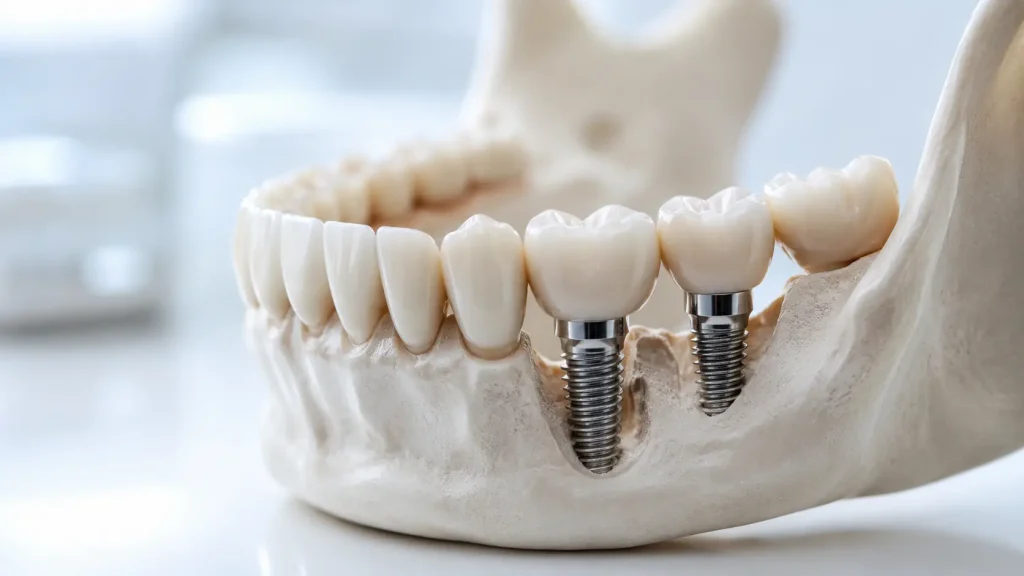
A dental implant in the lower jaw is a procedure designed to replace missing teeth using titanium implants. Each implant is a small titanium screw that acts as an artificial tooth root, a stable foundation onto which a prosthetic crown (the visible tooth) is mounted.
This solution is well suited for a wide range of patients: those who have lost a single tooth due to injury or extraction, those who have lost several teeth, and even those who have lost all of their lower teeth. It is an excellent choice for patients who wish to avoid removable dentures and prefer the natural look and feel of fixed replacement teeth. The implants are permanent, stable, and importantly, they help preserve the jawbone by preventing the bone loss that typically follows tooth extraction.
Before proceeding, a thorough pre implant evaluation is conducted, including an assessment of general health, jaw structure, bone volume and density, gum health, and the condition of adjacent teeth, all to confirm suitability for the procedure.
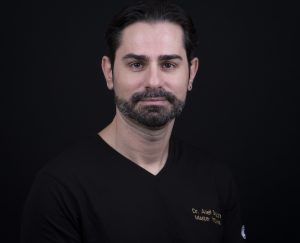
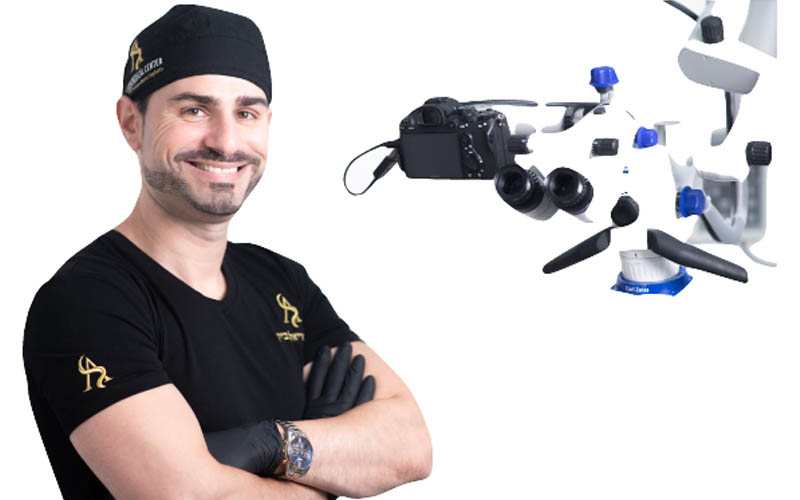
Dr. Ariel Savion has been an active dentist since 2007 and holds a dual Master’s degree from Germany in Laser Sciences and Dental Implantology. He has clinical expertise in laser periodontal therapy, microscopic surgery, and dental implant procedures.
He serves as the Medical Director of the dental corporation Savion Medical Center Ltd. and is the founder and owner of the prestigious master_implant educational club, dedicated to training dentists in advanced fields of dentistry.
In addition, Dr. Savion is the only certified instructor in Israel on behalf of the World Clinical Laser Institute in the field of laser dentistry.
Dr. Savion is an international researcher and lecturer and serves as a Key Opinion Leader (KOL) for leading medical companies in Israel and worldwide, specializing in laser dentistry, periodontology, and dental implantology.
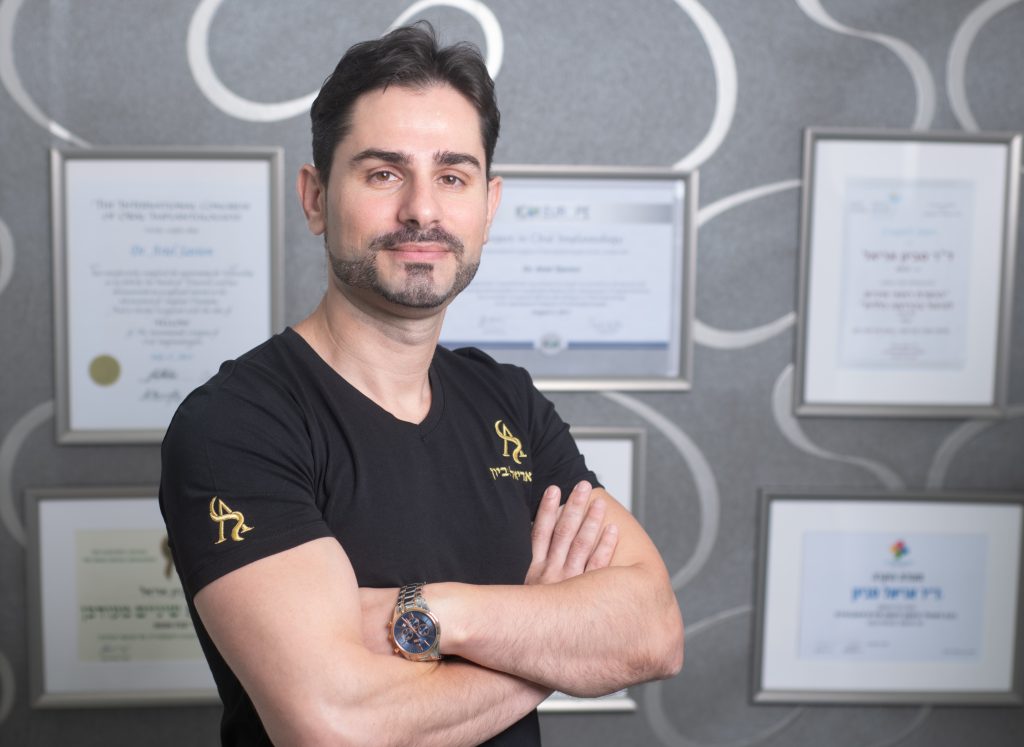
table of contents
The Laser and AI Revolution in Implantology
A technological leap is underway in implantology, driven by the integration of dental laser technology and artificial intelligence. Dr. Savion, among the pioneers of these innovations in Israel, has fully embraced this revolution at Savion Medical Center.
"The combination of laser and AI powered 3D imaging allows us to perform lower jaw implants with unprecedented precision," says Dr. Savion. "It significantly reduces trauma to surrounding tissues, enables effective sterilization, and accelerates healing, it fundamentally changes the nature of the procedure."
Dr. Ariel Savion:
Laser Technology in Implant Procedures
- Soft tissue management – Laser enables precise incisions in the gum tissue with minimal bleeding and near zero post operative pain, facilitating access to impacted teeth or preparing the site for implant placement.
- Bone shaping – Laser can be used to sculpt and prepare the bone to receive the implant with high precision.
- Infection control – Laser demonstrates exceptional efficacy in treating peri implant inflammation and infections, directly improving healing outcomes and implant success rates.
- Accelerated tissue healing – Laser energy stimulates cellular repair mechanisms, meaningfully shortening recovery time following implant procedures.
AI Integration in Treatment Planning
- 3D based treatment planning – Advanced software analyzes full arch CT scans to build a highly personalized, optimized treatment plan for each patient.
- Visual simulations – Patients can preview a realistic digital rendering of their expected outcome before treatment begins.
- Real time intraoperative guidance – AI assisted tools enhance precision during the procedure itself.
- Early diagnostic detection – AI powered analysis identifies even subtle early signs of developing issues, enabling truly preventive care.
"My experience with laser and AI allows me to deliver treatment at the highest level currently available," says Dr. Savion. "These tools demand advanced skill, but the results speak for themselves."
Dr. Ariel Savion:
Lower Jaw vs. Upper Jaw Implants, Key Differences
The upper and lower jaws differ significantly in bone density, anatomical structure, and the mechanical forces involved in chewing. A skilled implant dentist accounts for all of these factors when planning treatment.
Upper Jaw
Lower Jaw
Bone density
Generally lower, especially in the posterior region
Typically higher
Nerve risk
Lower
Higher, due to the inferior alveolar nerve's proximity
Sinus involvement
Sinus lift may be required
Not required
Recovery time
Typically longer
Shorter, owing to greater bone density
Procedural complexity
Generally more complex
Generally more straightforward
Treatment Methods Comparison for Lower Jaw Implants
Not all methods are appropriate for every patient. The table below outlines the main options:
Method
Description
Standard implant
Suitable for patients with adequate bone volume. Recovery: 3 – 6 months. Straightforward and versatile; requires sufficient existing bone.
Immediate implant
Placed at the time of extraction in patients with strong bone. Shorter recovery. Preserves bone structure; lower success rate than standard placement.
All on 4
Full-arch rehabilitation on four implants. Recovery: 4 – 6 months. Suitable for significant bone loss; faster results, but higher complexity and cost.
Computer-guided implant
Ideal for complex cases with limited bone. Less invasive, highly accurate. Requires specialized software and equipment; higher cost.
Implant with bone grafting
For patients with substantial bone loss. Recovery: 6 –12 months. Enables implantation where it would otherwise not be possible; longer and more involved process.
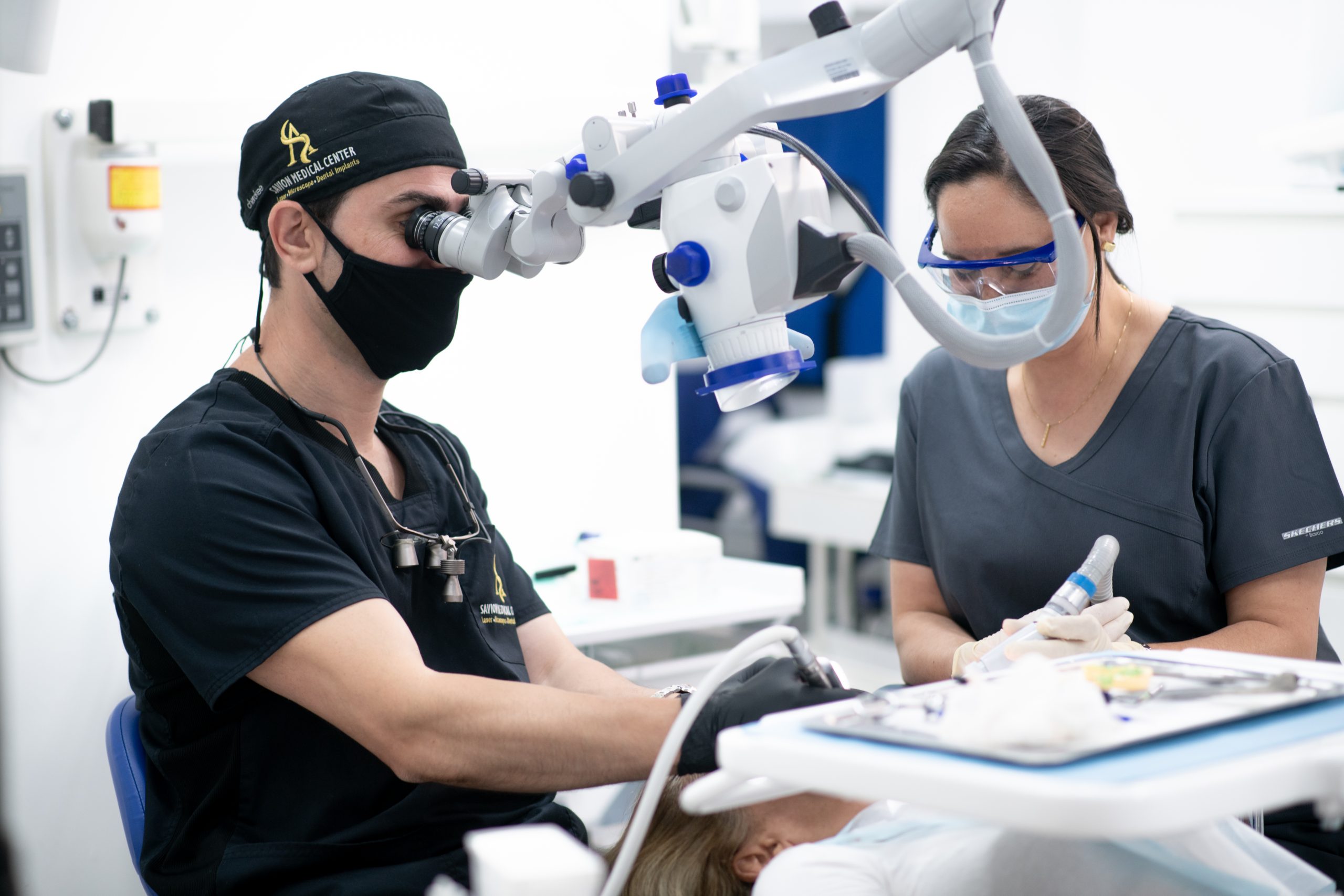
The Microscopic Implant Procedure, Step by Step
- Pre operative assessment and planning The process begins with a comprehensive clinical examination, including dental microscopy, digital CT imaging, and full evaluation of bone quality, gum health, and adjacent teeth.
- Site preparation Under microscopic magnification, a precise incision is made in the gum, followed by controlled access to the jawbone. The microscope minimizes collateral trauma to surrounding tissues.
- Implant placement The titanium implant is inserted into the bone under microscopic guidance, with meticulous control of position, angulation, and depth.
- Wound closure The incision is closed with fine sutures. When laser is used, sutureless closure is often possible, reducing post-operative pain and promoting faster healing.
- Osseointegration Over a period of approximately 3 to 6 months, the implant fuses with the surrounding bone. Follow up visits during this phase ensure optimal integration.
- Crown placement Once osseointegration is complete, the temporary restoration is replaced with the permanent crown.
Frequently Asked Questions
Full recovery, including complete osseointegration, typically takes 3 to 6 months in the lower jaw. Most patients, however, can return to normal daily activity within a few days of the procedure and receive temporary crowns in the interim.
As with any surgical procedure, some risks exist, though they are uncommon when the procedure is performed carefully by an experienced clinician. Potential complications include localized infection, implant rejection, bleeding, or nerve involvement. The use of advanced technologies, laser, AI planning, dental microscopy, and 3D imaging, significantly reduces the likelihood of such complications.
Yes. Lower jaw implants are routinely performed under local anesthesia. For more extensive cases, such as multiple implants, bone grafting, or patients with dental anxiety, the procedure can be performed under moderate or deep sedation, or general anesthesia. Our team is happy to discuss all available options in detail at your consultation.
During the procedure, patients feel no pain under local anesthesia. Mild discomfort or soreness in the days that follow is normal and manageable with prescribed analgesics. Most patients report that the experience was far less uncomfortable than they had anticipated.
Savion Medical Center, Where Clinical Excellence Meets Compassionate Care
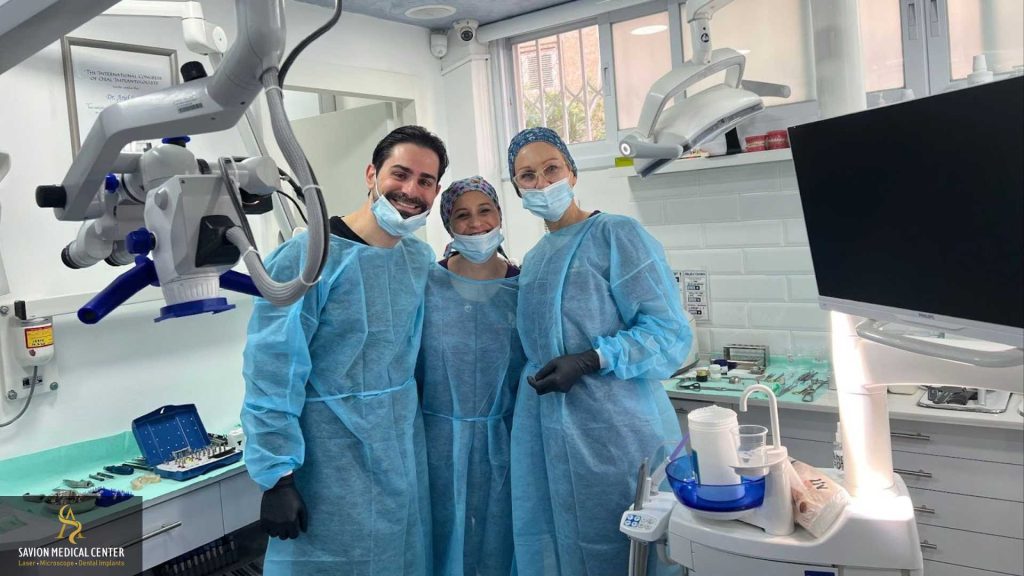
At Savion Medical Center, we believe that exceptional dental care goes hand in hand with a warm, reassuring environment. From the moment you walk in, our goal is for you to feel seen, comfortable, and genuinely cared for not just treated.
Our team, led by Dr. Ariel Savion, takes time to understand each patient's history, addresses every concern, and has extensive experience supporting patients with dental anxiety, including those who have avoided treatment for years.
This human-centered approach is matched by state of the art clinical infrastructure: CT imaging, dental operating microscopes, digital simulation software, and advanced laser systems. The combination of personalized attention and technical excellence is, we believe, the right foundation for outstanding outcomes, for patients and clinicians alike.