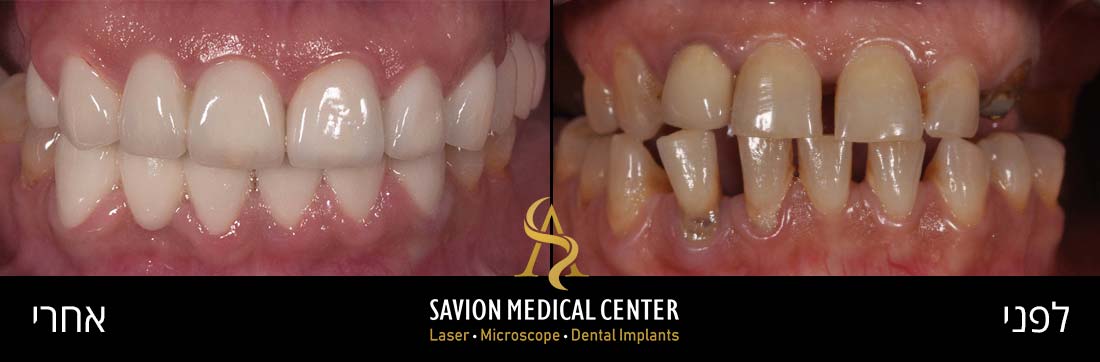
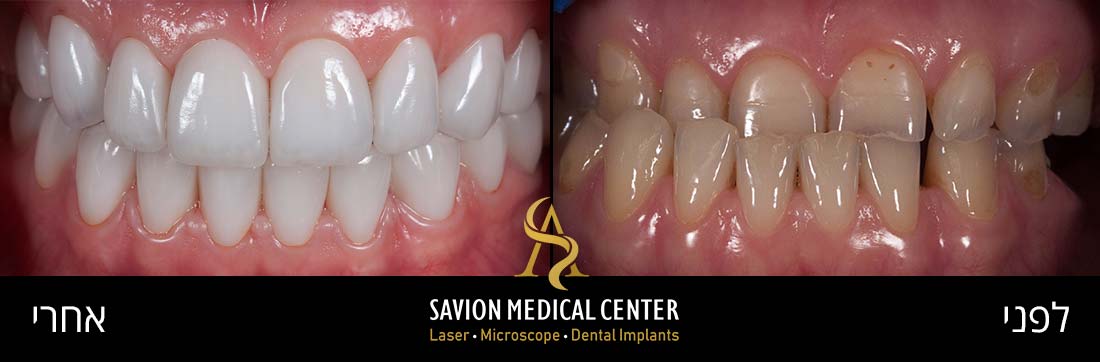
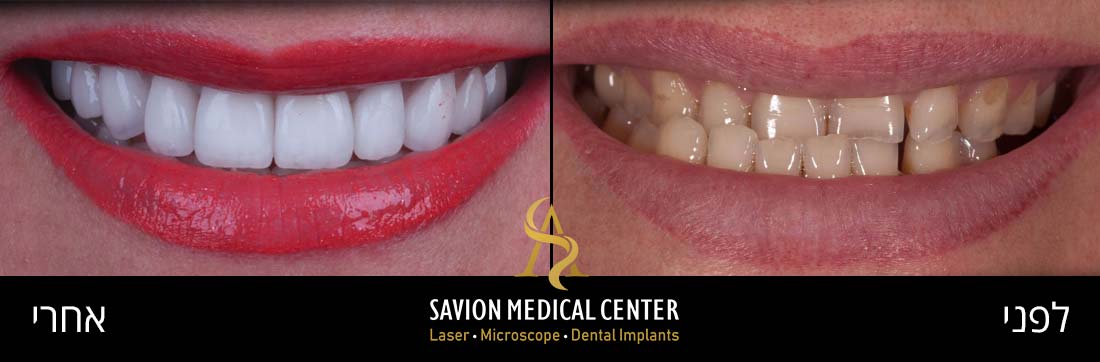
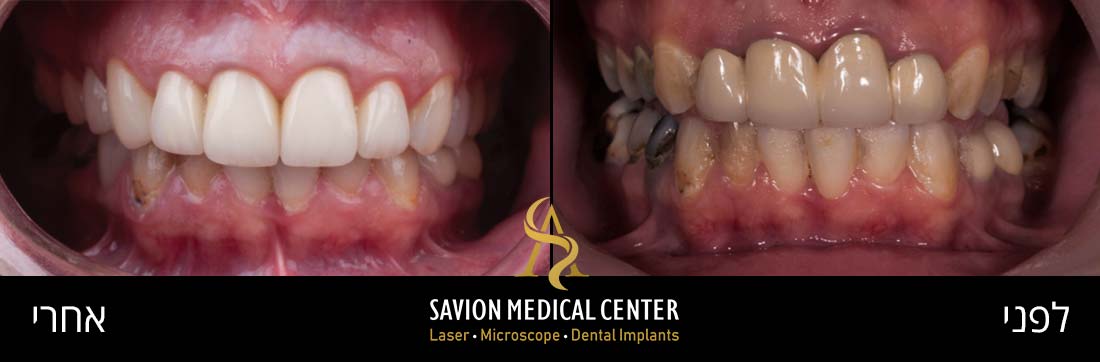
Porcelain veneers are thin restorations bonded to the tooth surface to correct aesthetic imperfections or provide protection. They have been in clinical use for over three decades and are considered elective, rather than medically necessary, treatments. Their popularity has surged in recent years as patient demand for natural-looking, aesthetically pleasing smiles continues to grow.
Today, veneers are fabricated in two primary forms:
Indirect restorations – monolithic porcelain with staining and/or feldspathic porcelain layering, fabricated in a dental laboratory.
Direct restorations – chairside composite resin, applied and sculpted by the clinician in a single appointment.
Indirect porcelain veneers are placed following minimal tooth preparation, typically between 0.3 mm and 1.0 mm of enamel reduction, and in some cases no removal at all. They are bonded to the enamel surface to maximize adhesion and minimize the risk of debonding.
Advances in dental materials and manufacturing technology have further increased the adoption of veneers, and growing patient awareness of their unique optical properties and excellent biocompatibility has made them one of the most requested aesthetic treatments in modern dentistry.
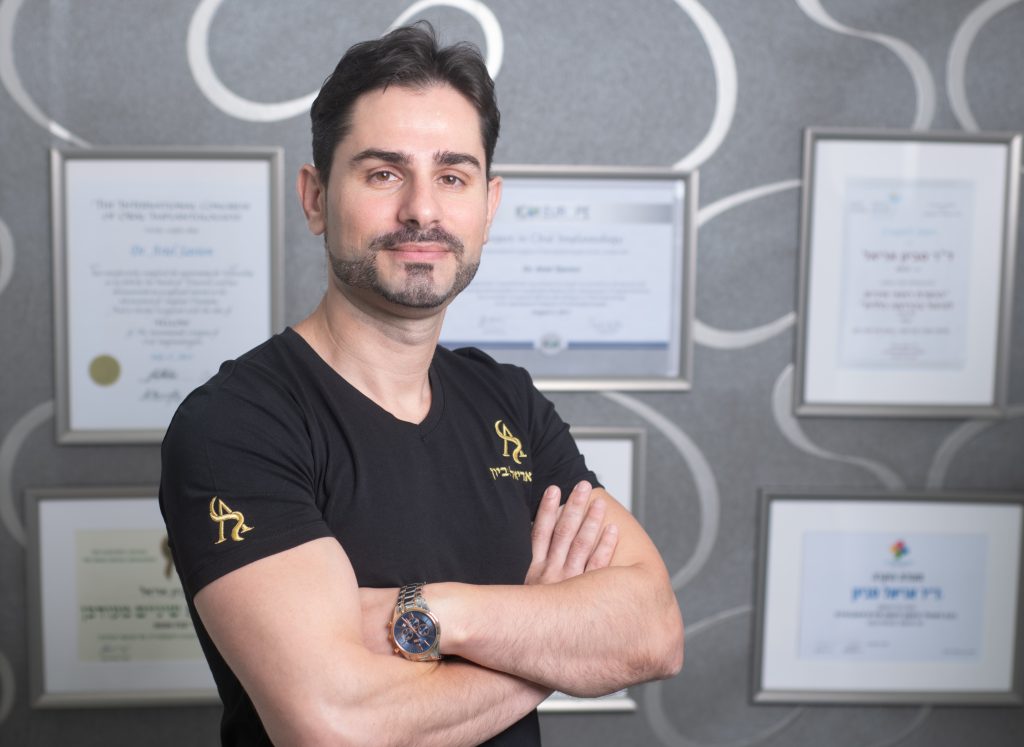
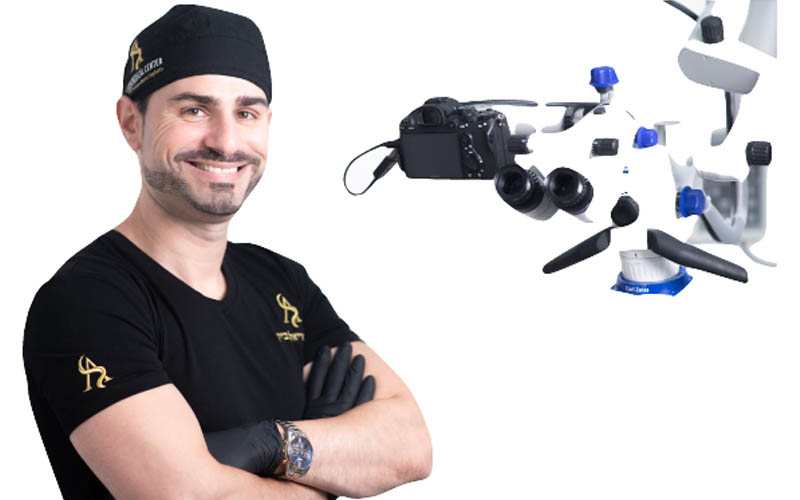
Dr. Ariel Savion has been an active dentist since 2007 and holds a dual Master’s degree from Germany in Laser Sciences and Dental Implantology. He has clinical expertise in laser periodontal therapy, microscopic surgery, and dental implant procedures.
He serves as the Medical Director of the dental corporation Savion Medical Center Ltd. and is the founder and owner of the prestigious master_implant educational club, dedicated to training dentists in advanced fields of dentistry.
In addition, Dr. Savion is the only certified instructor in Israel on behalf of the World Clinical Laser Institute in the field of laser dentistry.
Dr. Savion is an international researcher and lecturer and serves as a Key Opinion Leader (KOL) for leading medical companies in Israel and worldwide, specializing in laser dentistry, periodontology, and dental implantology.
Because indirect veneers are bonded with composite resin cement, which creates a strong interface between the restoration and the underlying enamel, their removal is significantly more demanding than removing a zirconia or metal-based crown.
The conventional approach requires sectioning with a diamond bur using a high speed handpiece, typically grinding through the entire veneer until it is fully removed. This technique carries a real risk of inadvertent tooth structure damage, since the visual contrast between enamel, cement, and the restoration itself is limited. The procedure is also time consuming, particularly when removing eight to ten veneers in a single session.
It is worth noting that in cases involving secondary caries, tooth fracture, or gingival recession, intact removal of the veneer is not a priority. However, in cases of incorrect bonding, improper cement selection, post-operative hypersensitivity, pulpal inflammation, or veneer discoloration, preserving the restoration intact becomes clinically significant. Successful intact removal avoids the cost of fabricating a replacement, saves both clinician and patient time, and enables same visit debonding and re cementation, something that is nearly impossible with conventional rotary techniques.
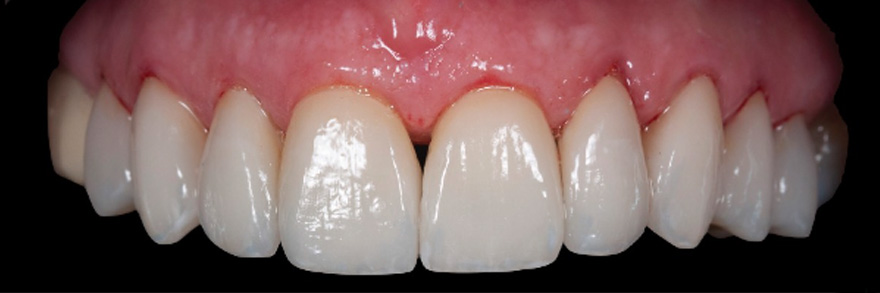
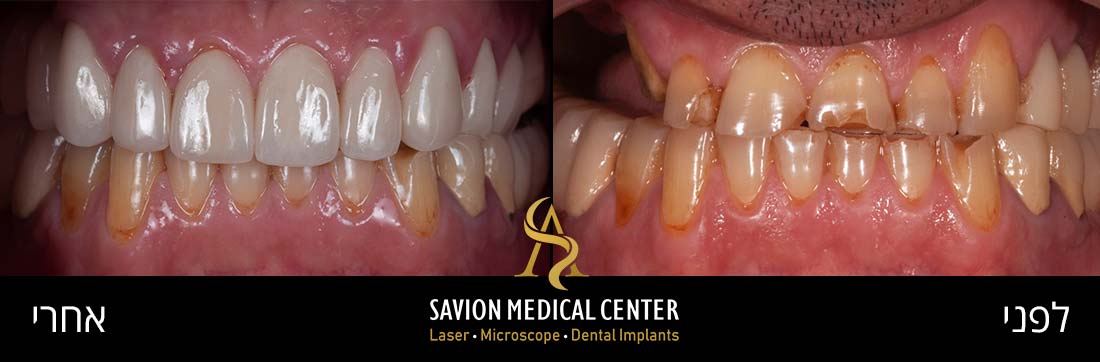
Initial condition after placement of 8 porcelain veneers in the upper jaw. The patient was dissatisfied with the final result, including the shape and color, and requested replacement of the existing veneers.
Laser Technology in Dentistry
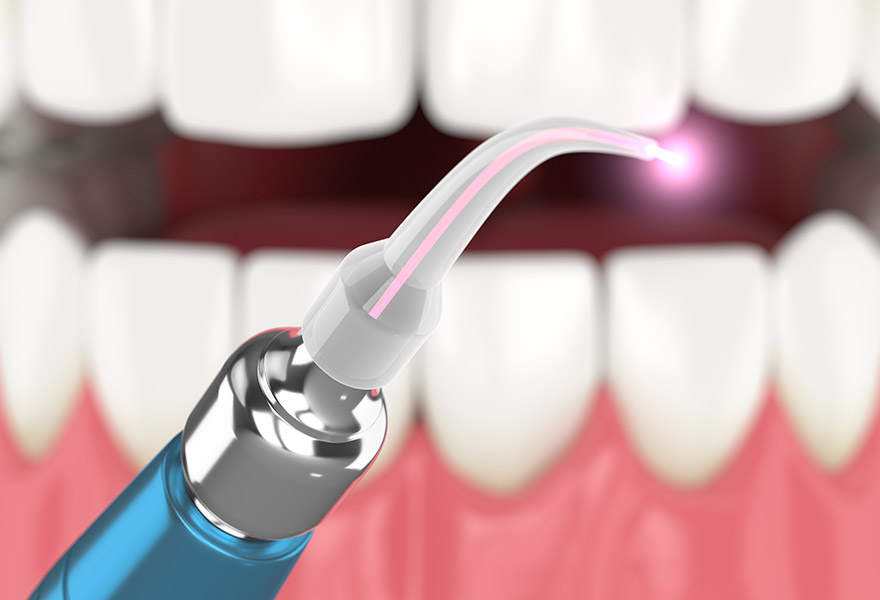
The guiding principle of modern dentistry is minimally invasive treatment: preserving healthy tooth structure, maintaining periodontal health, and avoiding unnecessary intervention. Laser technology is ideally suited to this philosophy, enabling conservative, precise treatment that reduces chair time and long-term costs for patients.
מטופלת עם שיניים לבנות ויפות מביאה פרחים כאות תודה לדר אריאל סביון
זוג מחובק עם דר סביון לאחר טיפול שיניים מוצלח
מטופלת לאחר טיפול שיניים מביאה הערכה עם מכתב תודה לדר אריאל סביון וצוות המרפאה
מטופל עם חיוך מקסים ודר אריאל סביון לאחר טיפול שיניים
מטפולת מביאה הערכה רבה עם פרחים וממתקים לד"ר סביון והצוות
מטפולת מאושרת לאחר טיפול שיניים עם דר סביון והצוות
הוקרה מרגשת לדר סביון – חיוכים ותודות על טיפול יוצא דופן
שווה כל נסיעה – החיוך החדש שלי בזכות דר סביון!
פרח לכל חיוך – תודה על טיפול מסור ומושלם עם דר סביון!
רגע של גאווה – טיפול מקצועי ותוצאה מדהימה!
מתנת תודה מיוחדת – על מקצועיות ומסירות ללא פשרות
תוצאה מושלמת למטופל מרוצה – תודה לצוות המדהים של דר סביון
What is a laser?
LASER is an acronym for Light Amplification by Stimulated Emission of Radiation. Unlike conventional light sources, laser light is amplified, collimated, and monochromatic, meaning it consists of a single wavelength. This energy is coherent and highly focused, making it applicable across many fields of medicine and industry. Because laser radiation can cause irreversible eye damage, strict safety protocols must be observed at all times during use.
Laser Removal of Porcelain Veneers
Laser technology has emerged as a more conservative and clinically elegant alternative to conventional veneer removal. The efficacy of laser debonding is influenced by several factors, including: the chemical composition and thickness of the restoration, the type of cement used, the optical opacity and shade of the veneer, and the laser parameters, power, frequency, and pulse duration, as well as total irradiation time.
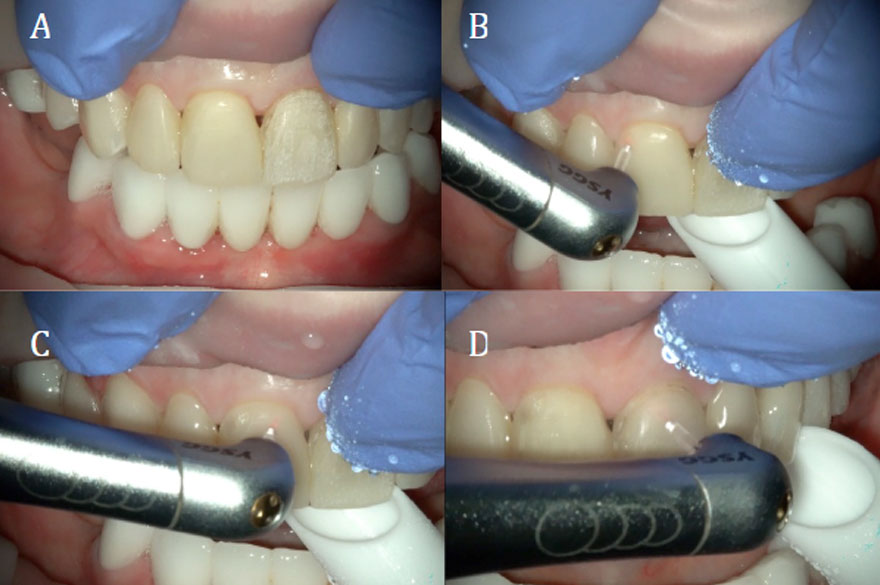
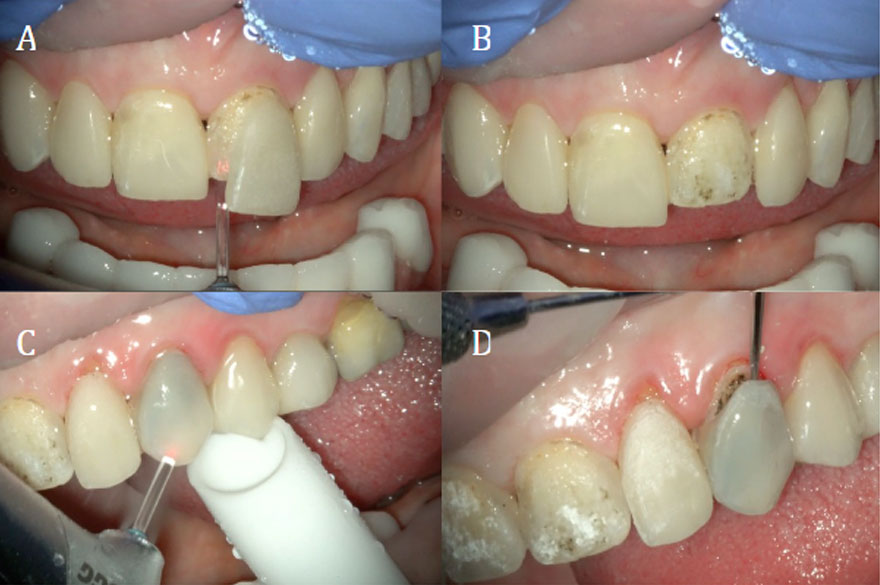
Removal of porcelain veneers using a laser. During the laser removal process, the laser energy is absorbed by the cement due to its water content, allowing the veneer to be detached without damaging the tooth structure and without heating the tooth. Image A: Color differences between the two jaws. Image B: Delivery of laser energy through the veneer, with a penetration depth of up to 30 microns. Images C and D: During the removal stage of 0.5 mm thick porcelain veneers.
Clinical Case
A 55 year old female patient presented dissatisfied with the aesthetic outcome following placement of eight porcelain veneers on her upper arch. Her primary concerns were the shape and shade of the restorations. The veneers had been placed at a thickness of 0.5 mm, with bonding limited to the buccal incisal surface.
In the laser debonding process, two key factors determine how laser energy is absorbed: the type of restoration and its thickness.
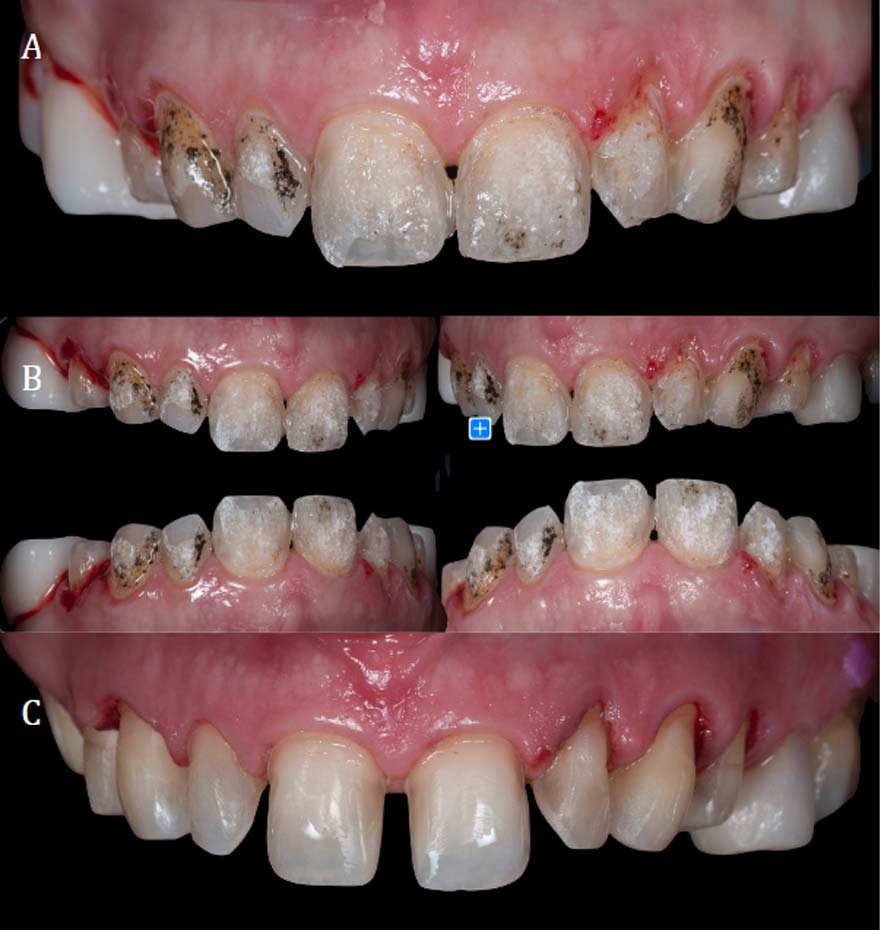
Condition after removal of porcelain veneers using a 2780 nm erbium laser. Image A: Final condition after removal of the porcelain veneers without damage to the tooth structure. Image B: Additional right and left side views after removal of the porcelain veneers. Image C: After polishing and finishing, the patient is ready for the impression stage for new veneers during the same appointment.
Treatment Objectives
The goals of laser-assisted veneer removal in this case were:
Remove the indirect restorations with a minimally invasive approach, without damaging underlying tooth structure
Shorten overall chair time during the removal phase
Preserve the integrity of the veneers for potential re-use
Since the decision had already been made to replace the restorations, veneer fracture during removal was not a concern in this particular case. Nevertheless, the laser approach remained preferable to the high-speed handpiece, which would have abraded the veneers, risked damage to healthy enamel, and precluded any possibility of reuse.
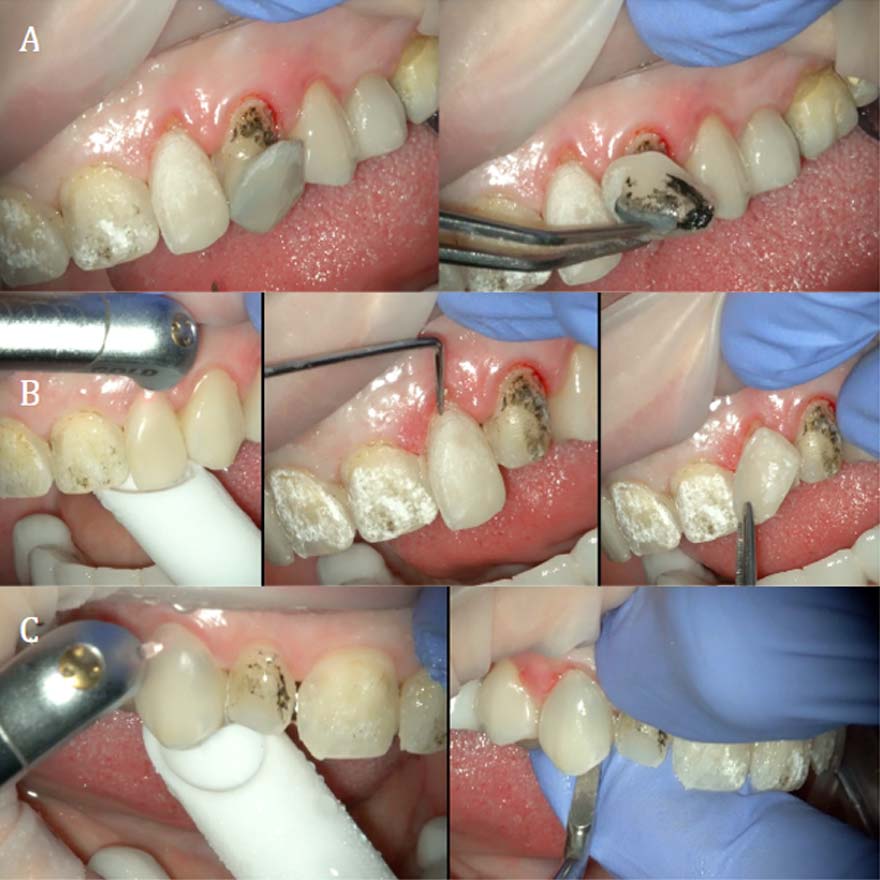
Separation of the veneers using laser light energy. Image A: Detachment of veneer on tooth 2.1 without damage to the tooth structure. Image B: Tooth 2.1 after removal of the veneer. Images C and D: During the laser removal stage and complete detachment of the veneer on tooth 2.3.
Laser Parameters for Veneer Removal
An Erbium, Chromium: YSGG (Er,Cr:YSGG) laser with a wavelength of 2,780 nm was used. This wavelength falls within the near-infrared spectrum and is strongly absorbed by water, with a tissue penetration depth of approximately 30 microns. Parameters: MZ8 tip (800 µm diameter), 60-microsecond pulse duration, 5W average power, 20 Hz repetition rate, with water and air spray deactivated.
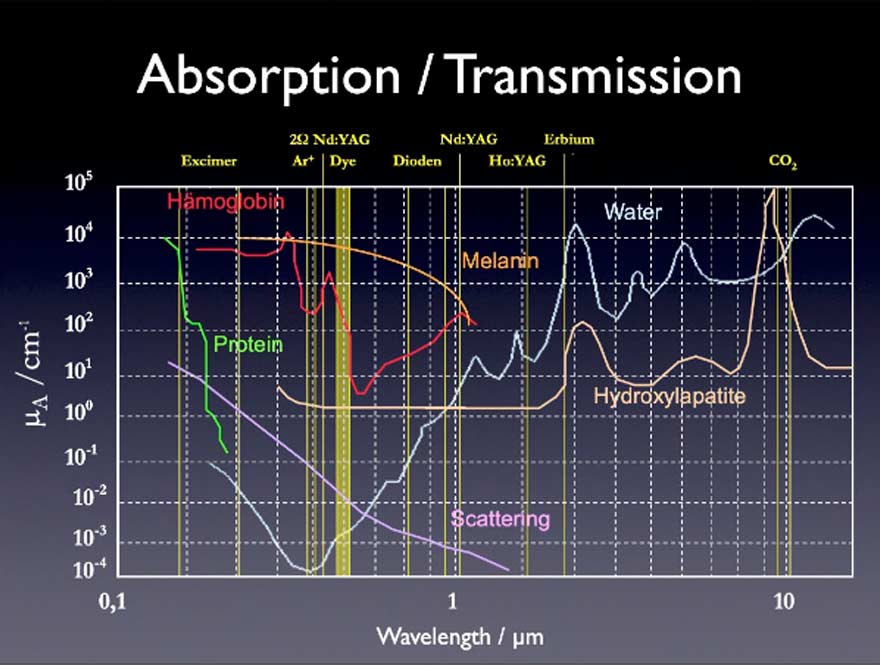
A table demonstrating the absorption and penetration depth of light energy according to the type of chromophore. According to the table, an erbium-family laser is well absorbed by water molecules during the laser process. In contrast, a diode-family laser is well absorbed by melanin and hemoglobin and passes through water. Therefore, using a diode laser for the removal of porcelain veneers is contraindicated.
About The Technique
Throughout the procedure, appropriate laser-protective eyewear was worn by all personnel in accordance with safety protocols. The tip was held parallel to the restoration surface at a distance of approximately 2 mm, with the beam delivered in horizontal and vertical scanning movements across the veneer surface.
As the laser energy is absorbed by the cement layer, a visible color change in the restoration occurs, indicating thermal uptake in the cement and progressive weakening of the bond.
A table demonstrating the absorption and penetration depth of light energy according to the type of chromophore. According to the table, an erbium-family laser is well absorbed by water molecules during the laser process. In contrast, a diode-family laser is well absorbed by melanin and hemoglobin and passes through water. Therefore, using a diode laser for the removal of porcelain veneers is contraindicated.
Laser vs. Conventional Removal, Conclusion
Laser assisted veneer removal represents a conservative, technically refined approach that overcomes the main limitations of conventional rotary techniques. It preserves tooth structure, maintains the structural integrity of the veneer, and allows for same visit debonding and re cementation, reducing both laboratory costs and chair time.
Its simplicity, precision, and minimally invasive nature make it a valuable addition to the modern aesthetic dentistry workflow.
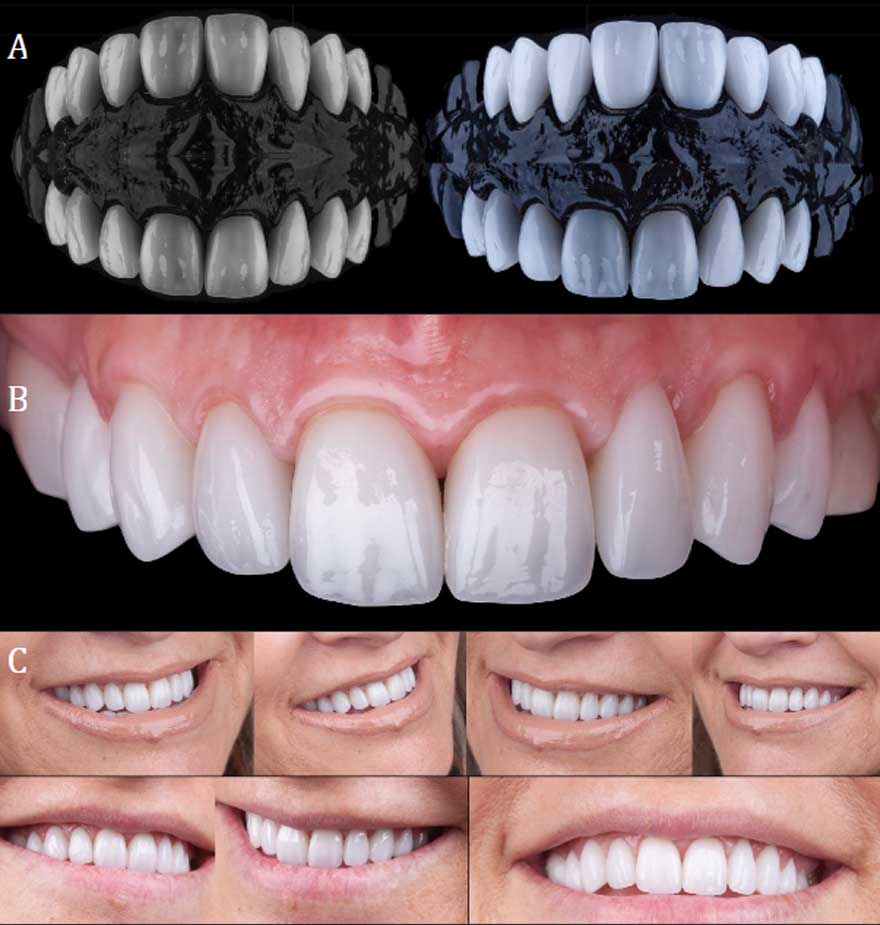
New porcelain veneers with a natural and aesthetic appearance. Image A: Ultra-thin porcelain veneers, 0.5 mm thick, on a black model. Image B: Final condition after bonding the porcelain veneers. Image C: Smile and teeth photographs at the one-month follow-up after bonding.
Dr. Ariel Savion
Dr. Ariel Savion is a dentist with over 15 years of experience, holding a double Master's degree (from Germany) in laser science and implantology (dental implants). He serves as the medical director of the dental corporation "Savion Medical Center Ltd." Owner of the prestigious educational club master_implant, which trains dentists in various fields. He is the only certified instructor in Israel from the World Clinical Laser Institute in the field of laser science in dentistry. Dr. Savion is a thought leader for leading companies in Israel and worldwide, a researcher and international lecturer in the field of laser dentistry, periodontics, and dental implants.