





What is dental anxiety?
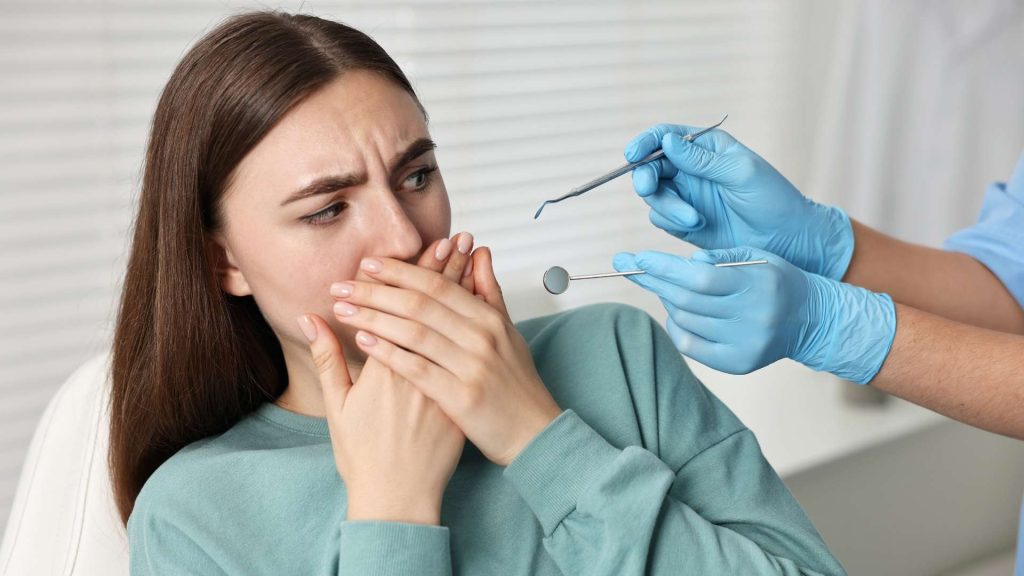
Dental anxiety is a relatively common phenomenon characterized by intense fear of dental treatments. Some dental professionals estimate that 60 to 70 percent of patients experience some level of dental anxiety. The intensity of anxiety is highly individual. For some patients, it manifests as mild apprehension that causes discomfort but doesn't significantly limit them or prevent them from attending appointments.
For others, anxiety reaches far higher levels. At the most severe levels, this becomes a clinical condition called phobia. In such cases, even mentioning a dentist or the need for treatment can trigger emotional and physical anxiety responses.
Patients suffering from severe dental anxiety may experience physical symptoms such as rapid heartbeat, excessive sweating, and genuine difficulty breathing. These symptoms can appear at the dental clinic, on the way there, or even when thinking about the clinic or dentist. Fortunately, there are numerous effective interventions available.
It's worth noting that alongside dentophobia, anxiety focused specifically on dental treatments, there exists a more generalized form of anxiety toward medical treatments in general. Patients suffering from this broader anxiety may experience distress both before dental treatments and before medical examinations or other types of medical procedures.
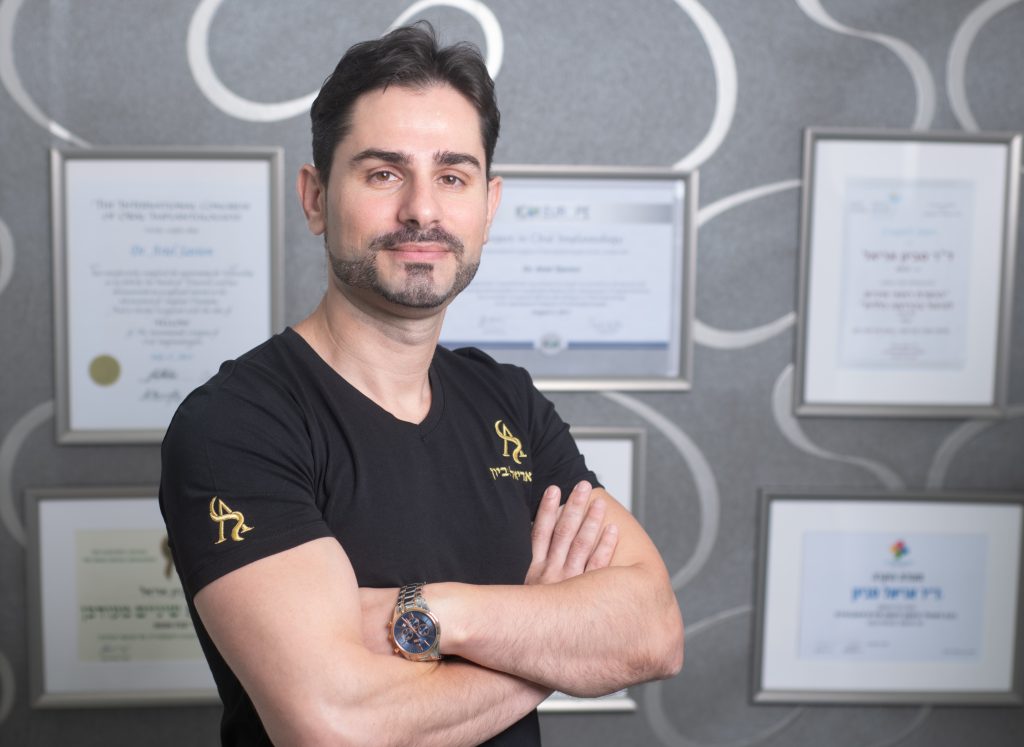
Dr. Ariel Savion has been an active dentist since 2007 and holds a dual Master’s degree from Germany in Laser Sciences and Dental Implantology. He has clinical expertise in laser periodontal therapy, microscopic surgery, and dental implant procedures.
He serves as the Medical Director of the dental corporation Savion Medical Center Ltd. and is the founder and owner of the prestigious master_implant educational club, dedicated to training dentists in advanced fields of dentistry.
In addition, Dr. Savion is the only certified instructor in Israel on behalf of the World Clinical Laser Institute in the field of laser dentistry.
Dr. Savion is an international researcher and lecturer and serves as a Key Opinion Leader (KOL) for leading medical companies in Israel and worldwide, specializing in laser dentistry, periodontology, and dental implantology.
Orit's Experience with Dental Anxiety: Dr. Savion Saved All My Teeth
Orit, a mother of eight, has suffered from dental anxiety since age ten. She recounts that childhood treatment became complicated.
According to her account, the dentist treating her became stressed and agitated mid-treatment, sweating and expressing frustration because something apparently wasn't working as planned in the treatment protocol. That dentist failed to consider how the stressful atmosphere was affecting young Orit.
The Positive Approach, A Caring and Sensitive Team - The Philosophy of Savion Medical Center
At Savion Medical Center, we believe that proper treatment must first understand where each patient stands emotionally and physically.
From our perspective, a warm and welcoming, home-like and embracing atmosphere is an integral part of the positive treatment approach. Our dedicated team, led by Dr. Savion, accompanies patients throughout their entire journey, providing genuine emotional support.
Our goal extends far beyond the important medical treatment itself (whether it's root canal therapy, extraction, dental implant, or any other procedure). We certainly strive for medical excellence, but we emphasize creating a corrective experience.
We recognize the profound difficulty faced by patients who have suffered for years from dental trauma due to unsuccessful treatments, impatience, or uncompassionate medical approaches. Dr. Savion believes in a personal and empathetic approach above all else. This worldview places the person and their emotions behind the patient, at the center.
Among other services, we perform treatments under moderate sedation for those dealing with dental anxiety. This type of solution is very calming, without long-term effects. Alongside the compassionate approach, sedation helps patients cope with anxiety more easily while maintaining a sense of control during treatment (since it's not full anesthesia, which has its own advantages and disadvantages).
Dr. Ariel Savion summarizes: "My philosophy is based on understanding that dental anxiety is a real problem and challenge, but it is treatable. It's important to me that my patients feel safe and protected from the moment they enter the clinic until they leave, satisfied. The extensive experience I've gained, together with the skilled and dedicated medical team working with me, allows us to provide quality, comprehensive, caring, and patient care.
We accompany patients at every stage of treatment, using the most conservative approach possible and minimally invasive solutions. The trust built between us and our patients is the secret to our success (and no less important, the success of our patients). This is how I view the proper and correct approach to dealing with dental anxiety."
How to Choose a Dentist or Dental Clinic to Help Overcome Anxiety
For those suffering from dental anxiety, choosing the right dentist or clinic for treatment means breaking out of the undesirable self-perpetuating cycle. The right choice can put an end to avoiding necessary dental treatments, end the suffering, and eliminate physical and aesthetic discomfort.
Often, it also means stopping unhelpful, unwanted, and incorrect self-blame. It's important to find a dentist and clinic that combine professional and quality worldview with an empathetic, compassionate, and understanding approach.
Here are several guiding principles we believe can help you or your loved ones overcome the difficulty and receive treatment:
- Look for a dentist with proven experience treating people suffering from dental anxiety. Such a dentist will also treat you with awareness of the problem's nature and depth. It's important that the dentist be aware of your special needs arising from the emotional foundation, so they can provide treatment accordingly.
- Check recommendations and patient reviews, emphasizing patients who suffered from significant dental anxiety. Detailed testimonials are best, as they most clearly indicate the added value the dentist (and entire clinic staff) brings to improving the therapeutic and emotional experience.
- Pay attention to the advanced technologies used in the clinic to offer the best for patients with dental anxiety. At a clinic offering, for example, laser dental treatments or performing digital scans with the most sophisticated equipment, smart and beneficial solutions are provided for reducing anxiety and discomfort. Technology enables, for instance, shorter treatment times alongside quieter treatments (lasers aren't as noisy as older dental equipment).
- Speak with the dentist or staff before scheduling a treatment appointment. A clinic willing to dedicate time to a preliminary conversation, clarifying needs, and getting to know patients in advance signals that you'll find listening, patience, understanding, and of course, appropriate solutions. Your feeling during the conversation, whether by phone or at the clinic, will help you make the right decision.
Why Do So Many Patients Fear Dentists?
Many patients fear dentists, not necessarily due to prior experience but also because of rumors, stigmas, or unsubstantiated information. The fear of pain certainly affects some patients, and negative past experiences contribute to the fear and anxiety. Additionally, the unique sounds and smells that characterize dental clinics, like the "buzzing" of the drill or the smell of disinfectants, can trigger significant anxiety responses.
Furthermore, negative experiences at a young age or parents who are very anxious about dentists affect children who later become adults with dental anxiety. Additionally, watching movies and television programs that portray dental treatments in a negative, grotesque, or threatening light causes patients to fear dentists.
Factors Influencing Anxiety Levels
Fear of dentists and the level of anxiety may stem from several reasons, which can appear at different intensities and thus affect anxiety levels.
Despite existing effective methods for reducing pain in dental treatments, many patients still associate dental treatments with significant pain. Often the fear stems not from personal experience but from information based on rumors or others' experiences. The media also plays an important role in showing uncomfortable and frightening aspects of dental treatments in movies or programs.
Many patients fear the feeling of lost control while sitting passively in the treatment chair, which is a factor that intensifies dental anxiety. The patient perceives themselves as vulnerable, unable to see exactly what's happening, waiting with an open mouth and not always understanding what will happen next or how long the treatment will last and its implications.
The dental clinic is full of stimuli, smells, and sounds that may evoke unpleasant feelings. The characteristic sounds of drilling instruments, the smell of disinfectants, the sight of the dentist's equipment, and so forth can trigger anxiety responses.
Previous treatments where the patient didn't receive explanations about the treatment, experienced unexpected pain, or was startled by loud noises can lead to anxiety development. Trauma from previous treatments plays a central role in developing dental anxiety, as do others' stories, which can fuel anxiety.
Some patients experience intensified anxiety due to shame about neglecting oral care over time. Additionally, anxiety about the unknown occupies an important place. Some patients hesitate to ask what will happen during treatment, how long it will last, and so forth. If the dentist doesn't provide explanations proactively and begins treatment immediately, anxiety levels rise.
How Can Dental Anxiety Be Reduced?
Now we'll highlight several methods that help reduce dental anxiety.
The Dentist's Role in Reducing Dental Anxiety
The therapeutic approach of the dentist can have a significant and critically important impact on coping with dental anxiety. Dr. Savion believes in a deep personal connection between caregiver and patient, a connection based on listening, empathy, and understanding. This type of connection leads to a more comfortable and secure feeling. Our clinic staff is aware of the importance of emotional needs.
The dentist's role (and that of the supporting staff) is to be attentive to the emotional needs of different patients. Before proceeding with treatment, anxiety reduction is achieved by dedicating time to understanding the emotional difficulty, building trust, and establishing confidence. Treating dental anxiety is similar in many ways to psychological therapy, integrated within the framework of dental treatment. This is collaborative work where patient and dentist work together to achieve the goal. Patience is a very central component.
We understand that each patient has their own pace of progress and we respect that. Close accompaniment continues throughout the entire treatment process, from beginning to end. We make sure to listen and explain. It's important to us to help patients feel they know at every moment what the dentist is doing and what will be performed next in the treatment. This type of understanding reduces anxiety and provides confidence. This is a holistic approach, because it's impossible to address only oral health without giving proper respect to emotional feeling, comfort, and sense of security.
Using Nitrous Oxide (Laughing Gas)
This type of gas is an important common means for reducing anxiety in dental treatments. The gas provides a mild calming sensation and is safe to use with no lasting effects. Its great advantage is that it works quickly and its effect dissipates quickly. Patients inhale the laughing gas through a mask, so during treatment they experience a feeling of calm and mild euphoria. Note that the gas is not intended for anesthesia; it's suitable for adults and children and makes the treatment a more pleasant experience.
Sedation
In cases of relatively severe anxiety, treatment can be performed not under laughing gas but under deeper sedation. Sedation is administered through various methods, either with sedative pills or intravenously (infusion). The effect is a relatively deep level of calm, feeling similar to drowsiness, though not deep sleep. This means the dentist can speak with patients during treatment and they can respond to instructions or receive explanations. Sedation may be particularly suitable for patients with high anxiety levels and relatively lengthy treatments are needed.
General Anesthesia
In cases of dental anxiety at the highest levels and in complex or prolonged dental treatments such as surgical extractions or dental implants, treatment can be performed under general anesthesia. Anesthesia is administered to patients whose general health condition is sound, with accompaniment by a licensed anesthesiologist.
Distraction Methods
During treatment, it's possible to use methods that distract from the sensations, smells, and sounds around. For example, listening to calming music or even lectures, or watching calming content during treatment, such as nature programs.
- Did You Know?
Treating dental anxiety is similar in many ways to psychological therapy, integrated within the framework of dental treatment. This is collaborative work where patient and dentist work together to achieve the goal. Patience is a very central component. We understand that each patient has their own pace of progress and we respect that.
How Can Fear and Trauma Around Dental Treatments Be Prevented in Children?
Preventing feelings of fear, negative attitude, or trauma around dental treatments in children is a process that should begin as early as possible. It's important to create positive experiences around
oral and dental health early on, even before the first clinic visit.
One effective method relies on parents conducting role-playing or simulating a visit to the dentist. You can use dolls or colorful, friendly children's books dealing with the experience of visiting the dentist in a positive light. Generally, it's advisable to talk openly with children, explaining the importance of dental health calmly and openly.
As parents, it's important to choose a dentist and clinic that are particularly oriented toward treating children. Pediatric dentists are naturally sensitive and skilled at creating a positive atmosphere with a patient approach. Experienced dentists use simple but clear language that children understand. They have a pleasant demeanor, explain each treatment step appropriately and comprehensibly to the child. Children's clinics are designed with an appropriate atmosphere and dentists provide small "rewards" as positive reinforcement with the progress of the examination or treatment.
But it's important to conclude that the parents' approach greatly affects the child, pay attention to personal example. As parents, make sure to convey a sense of confidence and calm. Doctors explain that children who begin visiting the dentist at a young age (even before age two) tend to suffer less from dental anxiety later in their adult lives.
The Laser Revolution in Dentistry Reducing Pain and Trauma
Treatment that reduces pain and trauma is no longer science fiction but tangible reality. This is thanks to medical laser treatment, which can replace many of the old treatment methods we know from dental clinics.
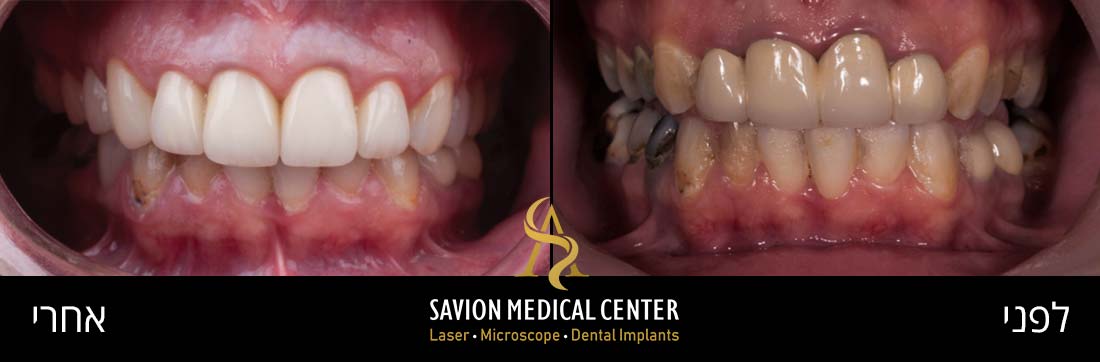
Dr. Savion, who underwent comprehensive training in new laser dental treatment methods (as part of studies in Germany over 3 years), explains that lasers in dentistry are nothing short of revolutionary.
Laser treatment reduces pain and trauma because it's a minimally invasive method. Lasers can reach difficult-to-access places that no drill or surgical scalpel can reach. The treatment focuses almost entirely on diseased tissue, disinfecting and vaporizing inflamed tissues in a way that accelerates healing and significantly reduces recovery time.
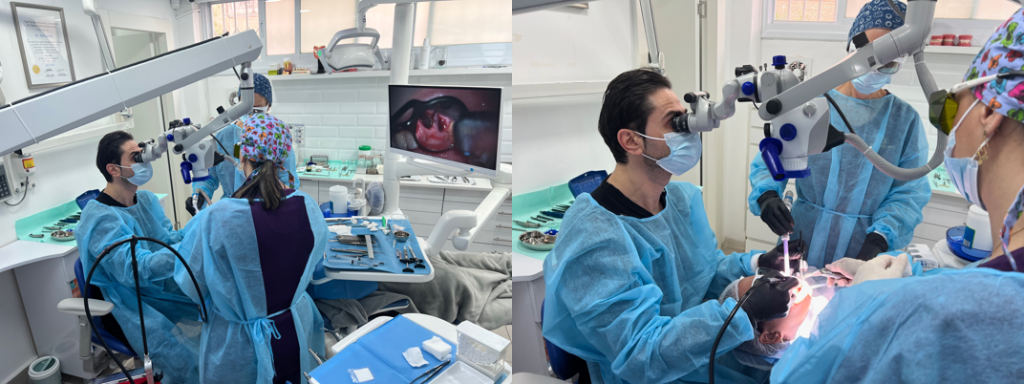
This treatment method drastically reduces pain, and that's not even all. Additionally, in some cases, the laser revolution (combined with magnifying surgical microscope) can even enable effective conservative treatment, meaning in some cases it's possible to avoid irreversible treatments, such as wisdom tooth extraction.
A New Era, How Advanced Technologies in Dentistry Help Patients with Dentophobia
Advanced technology in dentistry makes an enormous contribution to treatment quality, including in the aspect of anxiety reduction. This is a real and tangible revolution in quality treatment
adapted for patients suffering from dental anxiety.
One technology worth noting is digital imaging and intraoral scanning. This type of technology replaces the need for old-style impressions that many people fear. The digital scanner enables creation of a three-dimensional model of the mouth with remarkable accuracy. The computerized model is generated without causing discomfort to patients and without the choking sensation characteristic of using impressions. For patients with anxiety, this is breakthrough technology bringing significant relief and reduction of physical and emotional discomfort in treatment.
The use of CT (computed tomography) technology also represents a quantum leap in dental diagnosis. These scans, which take relatively little time, allow the dentist to obtain a comprehensive, complete, and accurate picture of the mouth and jaw structure. For patients, the result is unequivocal, faster and more accurate diagnosis and quality, precise treatment plan development. All this alongside reducing the number of clinic visits required and even less time sitting in the treatment chair. All these together contribute to anxiety reduction and improved satisfaction.
Another technology that can certainly be called revolutionary is the use of medical lasers. Lasers enable a wide range of treatments to be provided more gently, more precisely, without noise, with less pain, and even reduce bleeding. For patients suffering from anxiety, the benefits are clear: less pain means less anxiety. Additionally, lasers reduce pain and therefore may eliminate the need for local anesthesia in some cases. This is real relief for patients who fear needles. By the way, laser treatment also accelerates the recovery process, so the entire treatment is essentially faster, more comfortable, and can be said to be more positive.
Benefits of Laser Use for Patients with Dental Anxiety
Lasers can treat gum disease and other dental problems fantastically. Laser use for patients with dental anxiety is so significant because it contains numerous benefits that bypass or neutralize the causes and factors of anxiety. For example:
- This is the most advanced dentistry, performed without incisions and without sutures. Patients who are anxious about the dentist and for whom just the thought of sutures triggers enormous difficulty can breathe easy.
- The treatment is inherently minimally invasive. This means the doctor focuses on precise treatment that "touches" almost exclusively diseased tissue. There's virtually no contact with healthy tissues.
- Another additional benefit worth mentioning lies in the fact that laser as a therapeutic technique is suitable not only for patients with very good general health. The treatment is suitable even for pregnant women, diabetics, systemically ill patients, and more.
- Laser use is done without disturbing and anxiety-inducing noises. Dental anxiety stems considerably from fear of the threatening sound of drilling that accompanies routine dental treatments. Lasers replace the use of drills or turbines as important treatment tools. When treatment is so quiet and silent, it's no wonder that anxiety dissipates significantly and sometimes almost disappears completely.
- Treatment effectiveness is also noteworthy in this context, and this can reduce the fear of more anxious patients. Lasers can vaporize and disinfect inflamed tissue, and everything is done accurately, more quickly, and of course sterilely. When a skilled doctor who excels at creating a pleasant and calming atmosphere enters the picture, the results are excellent both therapeutically and emotionally.
- Laser whitening can be safely performed every six months to brighten/maintain original tooth shade without concern, avoiding enamel damage from minimal hydrogen peroxide exposure
- Recent research shows that increased whitening agent exposure to tooth enamel (at-home whitening) can damage tooth structure, creating rough surfaces that encourage bacterial colonization
- During whitening, both hydrogen peroxide concentration and exposure time matter - excessive at-home use may cause more harm than benefit